
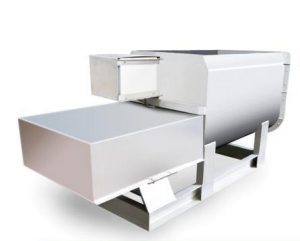

Stainless steel double helix gluten machine
- At thewheat starch production line,dough mixing and gluten separat-ed,removed is the first important procedure。
- 1.Designed independently;
- 2.Applied for a national patent。
- 3.Operation easily。
- 4.Rotational speed low。
- 5.Running stable。
- 6.Service longevity
- 7.Extraction rate highter。
- 8.Application wide。
E-mail: [email protected]
Mobile:+86 15515596408(WhatsApp/Wechat)
Potato and cassava starch production line
Brief introduction of the structure of the machine
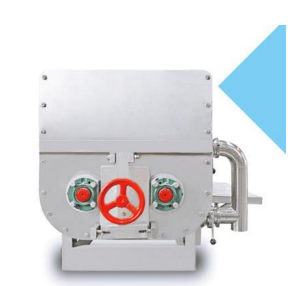
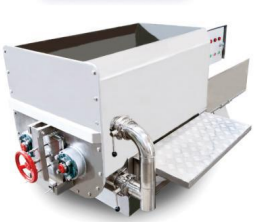
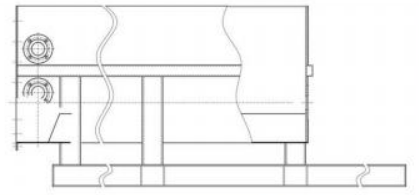
The double-spiral gluten washing machine has a cylinder with a double-arc bottom, and two parallel spiral stirring blades are installed at the bottom. The blades are forged with high-quality steel, and there is no through-shaft in the middle. When working, the two stirring blades rotate in opposite directions, so that the dough is pushed from the front, back, left, and right to the middle, so that the dough is stirred evenly and has a strong effect. Since there is no through-shaft in the middle, there will be no shaft sticking phenomenon during operation, thus eliminating the mixing dead angle and dough sandwiching problems that are easy to produce in general mixers, and at the same time, it also reduces the labor intensity of cutting gluten. Since gluten kneading and gluten washing are carried out in the same body, the gluten yield is relatively high.
Installation and use of the machine
The gluten machine should be installed horizontally on the concrete foundation and tighten the anchor bolts. For the double-reduced machine, the coaxiality of the reducer and the spiral shaft should be adjusted. The radial offset of the two axes of the cross slider coupling is <mm, and the deflection angle is 30′. The rotation directions of the two shafts are opposite. Before starting the machine, you should first check whether each rotating part is flexible and there is no jamming phenomenon, whether the discharge port is closed, and then start the machine, add water and feed. 500 type each time to add 20 bags of flour (500 kg), the amount of water is generally 1/2 of the weight of flour, the dough made of soft wheat flour is easy to break and tear, so less water should be added, and the water temperature must be around 20℃. Depending on the water quality, sometimes about 0.5% of salt can be added to promote the formation of gluten. The specific operation is as follows: add water to the same height as the protruding point in the middle of the double helix. When using it for the first time, put less water, the horizontal plane is not up to the protruding point of the double helix, and there is a lack of 3mm, so as to leave space for later operation. After water is added, 20 bags of noodles are put in, each bag is 25 kg, the spiral is turned on and turned forward 5-8 times, stopped and started, and then turned backward 5-8 times, and the noodles are mixed evenly. The dough turns in the direction of the motor, and the dough is turned over. When the dough surface is smooth, stop for about 5 minutes and let the dough return to the other end by itself. After the dough returns to its position, add the first water, add water 100mm away from the upper mouth of the gluten machine, turn on the double spiral to one end and run 5-6 times, stop and run in the opposite direction, run 4-5 times in this way, let the dough concentrate in the direction of the motor, stop the machine to release the first starch slurry, note that the first operation time cannot be too long, too long will wash the gluten away, so 4-5 times of slurry release, the gluten machine itself forms a gluten group, and the last time is to push the gluten in the direction of the motor, and stop the machine after the starch slurry is released. Open the hand wheel of the gluten machine, open the discharge port, let the double spiral run toward the outlet, and push the gluten out of the machine outlet through the spiral. When the machine is used normally, it takes about one hour from mixing the dough to washing the dough. In order to gain operating experience and methods, the first few times will take a little longer. When mixing the dough, observe the ratio of flour to water. If the flour is too dry, add a small amount of water immediately. The dough should not be too hard, as it will affect the gluten yield. It is also not good if it is too soft, as it will affect the starch yield. After several operations, keep a record so that you can master the operating methods. A large number of water molecules penetrate into the protein particles and combine with the gluten network, making the dough have good elasticity and scalability. Generally, the dough is completed when the surface is shiny, bubbling, and not sticky. The dough should be left for several minutes after mixing to increase its strength (the length of time should be controlled according to the climate). After the starch slurry is drained, the gluten is discharged.
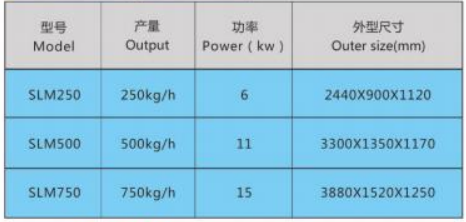
Main technical parameters
Precautions
2. Avoid long-term continuous use. Long-term operation in a non-stop state will cause the gluten machine to heat up or even malfunction.
3. Safe operation. Never touch the rotatable part of the gluten machine with your hands. If you find any abnormality or minor faults, you should stop the machine immediately and take corresponding measures.
4. Pay attention to cleaning and maintenance. After use, clean all parts; if it is not used for a long time, correct protective measures should be taken.
5. Working environment. When operating the gluten machine, it should be in a clean, spacious, bright and well-ventilated place, and should not be placed in a humid or dark place.
6. Make adjustments. If you need to adjust the pressure of the gluten machine to the best state, you should first understand the properties of the dough and make corresponding adjustments as needed.